The Matrix Had Bullet Time. Your Website Has 1 Second

A quarter century after The Matrix, audiences still know bullet time on sight: one second of screen time, months of engineering underneath. Your website has its own version of that second. It is the moment between a visitor tapping your link and something appearing, and it decides more about whether they stay than anything you wrote. Google measures it, ranks by it, and publishes exactly how it is scored, yet most small business sites have never been tested once. This post breaks down what happens inside that second, the three metrics that grade it, and the fixes that actually move them.
What The Matrix Really Changed.
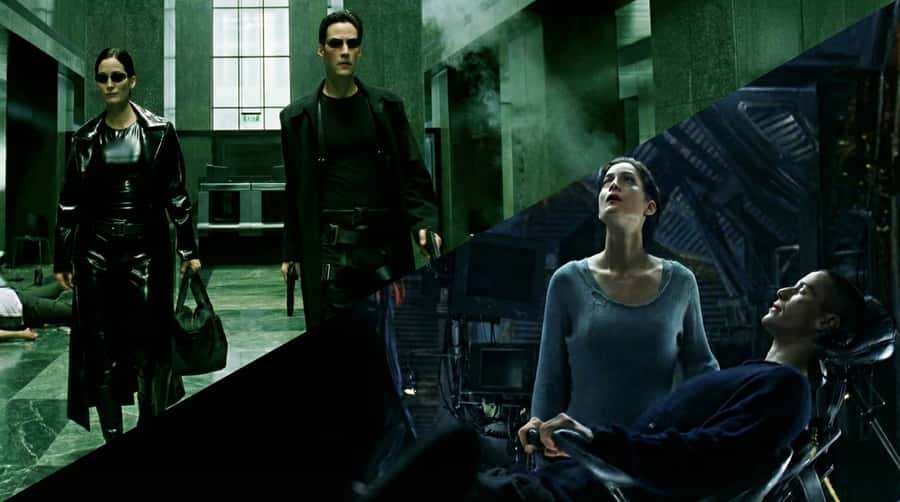
Even today, 25 years later, viewers instantly recognize its cues: the green digital rain, the dual-world color palette, the slow-motion clarity of bullet time. These weren’t stylistic flourishes — they became part of our shared visual vocabulary.
For brands, that shift matters more than most people realize.
1. The Visual Baseline
Bullet Time
The film’s signature effect — 'bullet time' — became one of the most imitated visual ideas in modern cinema. Why it matters: It made complexity legible. It let audiences see chaos with perfect clarity — a concept that now feels standard, even expected. Today’s viewer assumes visual media should 'just make sense,' fast.
Historical Counterpart: Vertigo
Decades before bullet time, Alfred Hitchcock introduced the 'dolly zoom' in Vertigo. By moving the camera forward while zooming out, he created a disorienting shift that visually conveyed psychological collapse. Like bullet time, this single innovation permanently altered visual literacy.

2. Coherent Dual-World Look
The Wachowskis used two distinct palettes: Green tint for the Matrix, Blue tint for the 'real world.' This helped mainstream audiences feel color as context.
“A generic layout feels like a simulation of a real brand.”
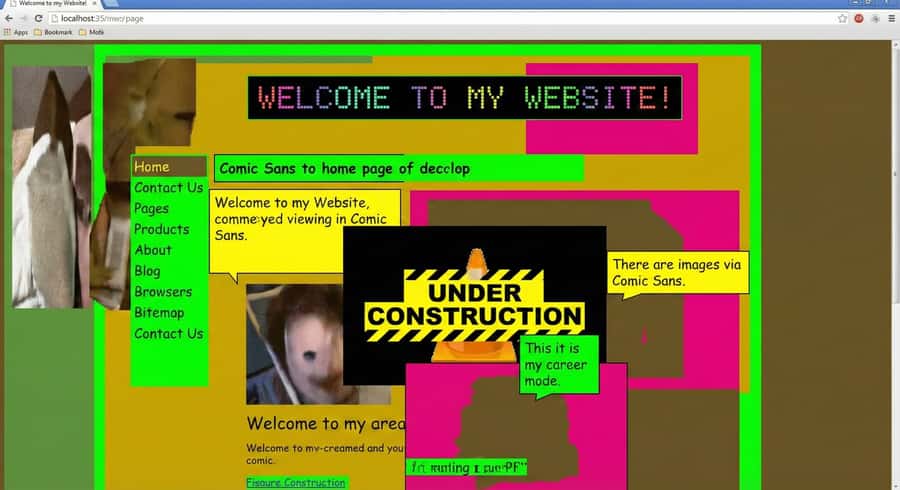
The Branding Anomaly
So what does this have to do with branding? A lot. After The Matrix, audiences unconsciously expect clarity, intention, and cohesiveness. Their bar for 'professional' is shaped by everything they watch and use.
A confusing website feels like glitching code. A mismatched color palette feels 'off'. A generic layout feels like a simulation.
Most Small Brands Struggle Here
Not because they’re sloppy, but because the digital 'baseline' has risen far faster than budgets. Modern audiences compare every site to apps with billion-dollar design teams. It’s an unfair fight. That is, unless the platform handles the heavy lifting.
The Construct:
StoryPress
StoryPress was built on a simple idea: Every business deserves a site that meets modern visual expectations — without requiring modern budgets. We do that by providing modular components that stay coherent by default.
One Visual System. Infinite Realities.
The Matrix rewired cinema’s aesthetics — StoryPress lets you do the same to your site.
Every page, post, and collection can break the mold: swap layouts, mix components, shift tone. Unified design language, fully bendable rules. Choose your reality.
The Essentials, Pre-Loaded
Think of it as your “I know SEO” moment.
Analytics, SEO, lead capture — already plugged in. No plugins, no kung-fu downloads. Just open the laptop, and you’re already ahead of the agents.
Closing Thought
The Matrix changed visual culture by making complexity feel understandable. People expect that everywhere now. Brands that deliver clarity win attention. Brands that look accidental lose it. StoryPress gives small businesses the clarity advantage — without needing to be Neo.
Subscribe for more — See How Far You Can Bend the System

Entering the Upside Down: What “Stranger Things” Teaches Us About Branding
How one show turned nostalgia, typography, and world‑building into a masterclass in brand — and how StoryPress lets us bring that energy into a single post. Tonight, as Stranger Things returns for its fifth and final season, it’s not just Netflix lighting up.

Your Website Just Got an AI Co-Pilot: The StoryPress MCP Server
Every website platform is bolting on an AI feature this year, and nearly all of them are chatbots that write paragraphs. We shipped something different: a live connection that lets an AI assistant like Claude see and operate your actual site: read the pages, know the components, make the edit, publish it. It is built on MCP, an open protocol rather than a proprietary sidebar, which means the assistant improves every month without us rebuilding anything. This post explains what that connection is, what editing a site by conversation looks like in practice, and why we bet on an open standard.